Blaming the education system is one of well fed elite India's pastime.
Despite major social leader of the past century (Swami Vivekananda, Gurudev Rabindranath Tagore, Sri Aurobindo, Mahatma Gandhi, and J. Krishnamurthy, being the prominent ones) trying to reform education in their own way, the challenges of irrelevant and unreliable education quality persist.
While the persistent challenge is structural, and each one of the above have tried to change the structure, their followers eventually descend to being content with content modifications. The alternatives to mainstream education in India has a broad spectrum between elite western influences ''free space'' learning spaces of abstract vagueness and obscurantist followers of retrograde gurus of various faiths
The teacher is a central figure in the entire education system machinery and is almost always taken for granted by the reformist followers and alternative educators alike. The training the teachers undergo to qualify is obviously impacting their profession career behaviour and priorities. Recently I got to visit one of the Teacher's training colleges in my state of Tamil Nadu, the following is my note from the visit and a limited follow-up research online. While I don't profess to be an expert in Education (indeed the more I know the less I feel confident to say anything in our context), I think this is a less understood aspect of educational debate in the country, so, sharing this as a note.
Bachelor of Education (B.Ed. for short), is the minimal and compulsory qualification for teacher job. Both private and government schools need to have teaching staff who are qualified through this 2 year course. The two year B.Ed. course consists of 3 semesters of theory classes and 1 semester of practical experience. Currently there are about 600+ colleges offering B.Ed. courses in the state. The following is the reality of the B.Ed. college based on observation and interview, which I am told is the case with many of the colleges in the state.
The University prescribed fees for the B.Ed., course is INR 37,500 per annum. While some colleges charge far higher than that, the cost of managing the course is definitely not covered through such a paltry sum of money. Candidates from Scheduled Caste and Scheduled Tribe backgrounds are provided with 90% subsidy on the course fees. Very few colleges managed by Trusts and Foundations are not bothered by the low fees as the staff are supported from other sources. Rest have to struggle financially to sustain themselves, with the result most staff are not compensated to the extent their job demands from them.
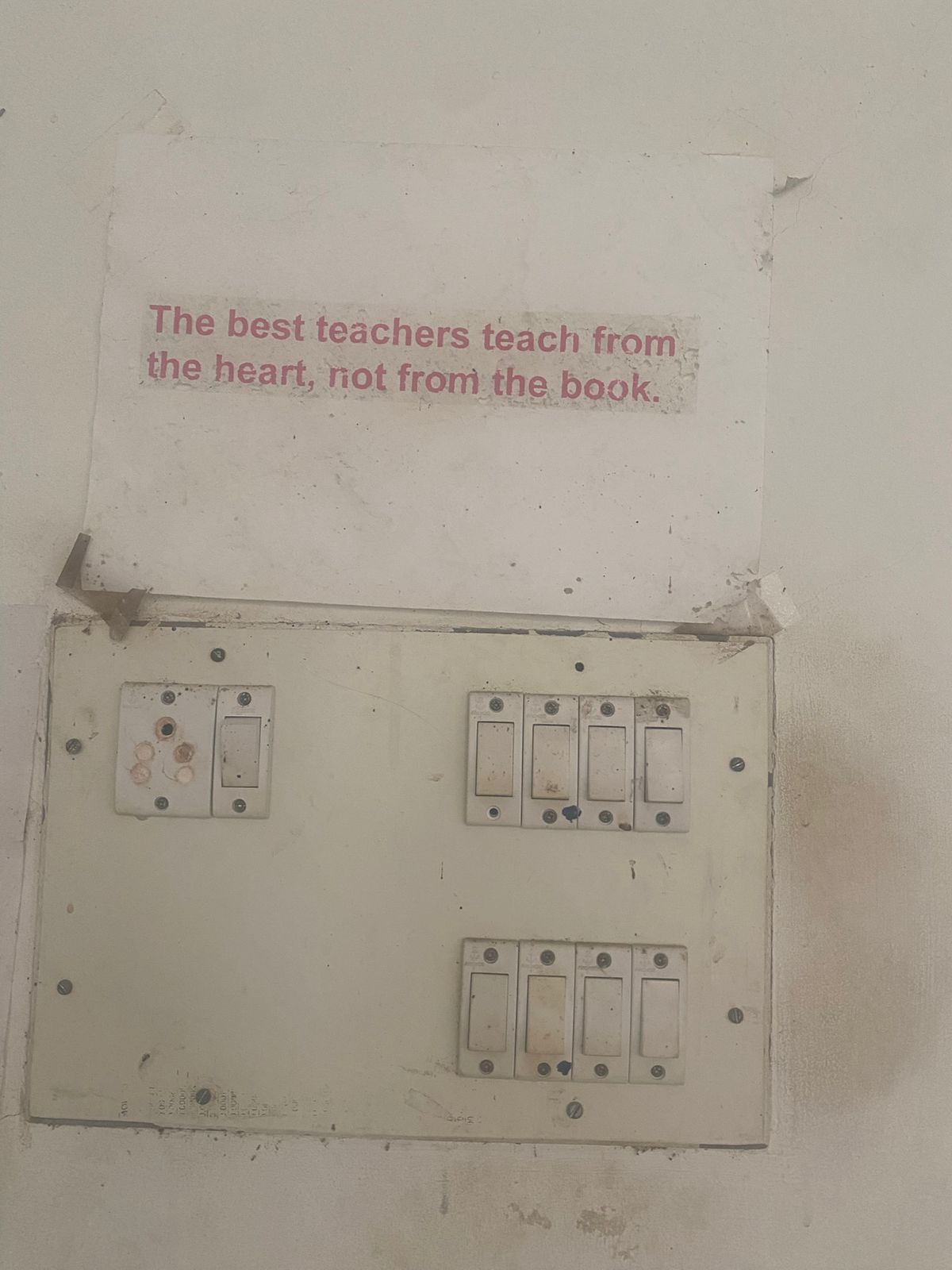
Not sure if the eerie silence of the place hit me first or the absence of students in a college campus as I enter, later as I return I think it was the sense of defeat that loomed in the place. Vacant classrooms and auditorium, unoccupied administrative block chairs and tables with a skeletal staff looking vacantly, locked hostel buildings being taken over one crevice at a time by Banyan and Asoka trees, the kitchen that is locked and the dining hall catering to the watchman with his box. The campus in the middle of a village road had a bus stop especially for it. As we enter the administrative block that overlooks the auditorium on one side and the fancily built guest faculty quarters on the other, I notice the several inspiring quotations for teachers, group photos of earlier batches when the place was bustling with students, and the posters of many of the educational reformers mentioned above, adorn their walls. "The best teacher teaches from the heart, not from the books", says a poster above a much dirtied switch board.
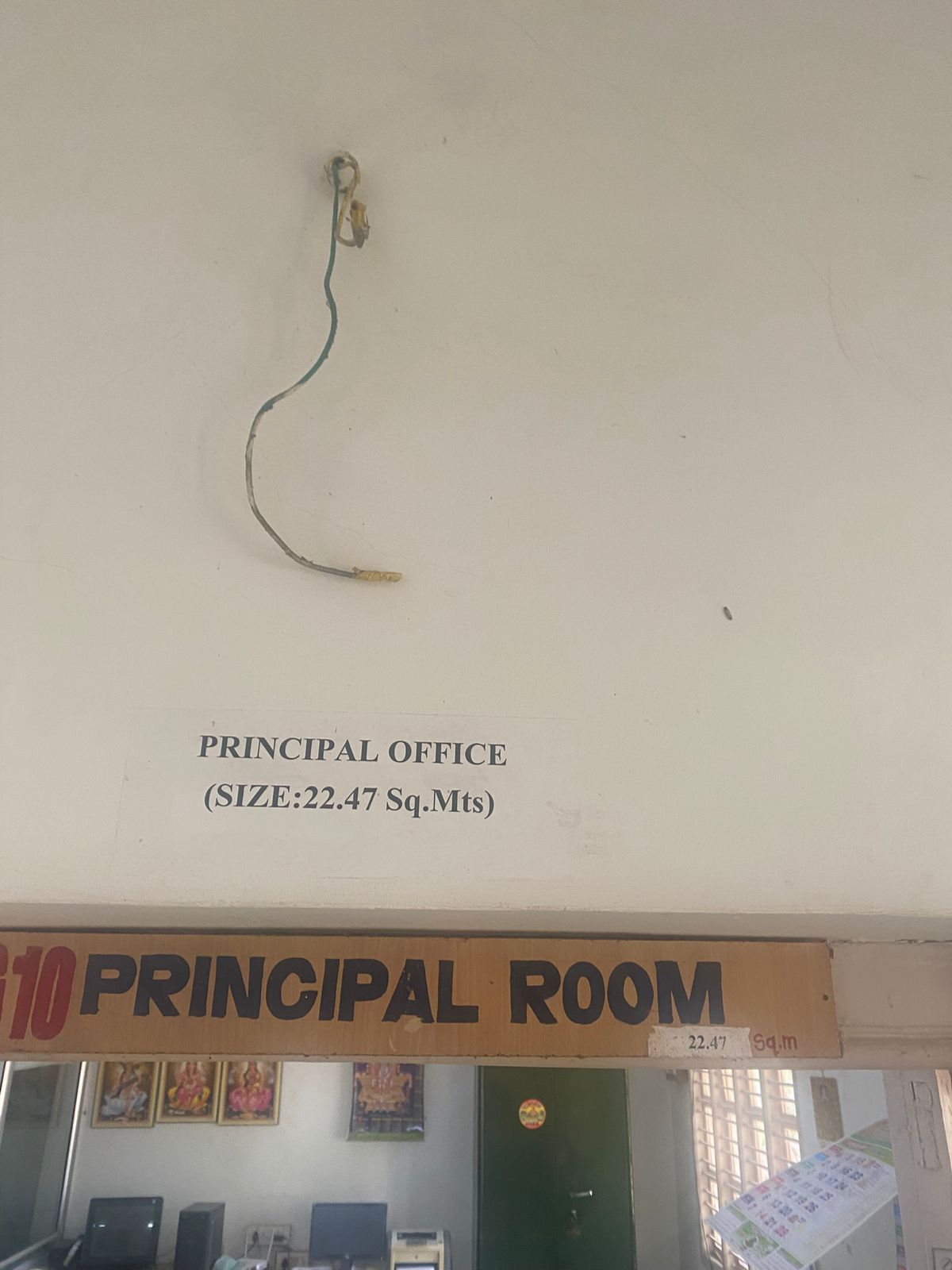
"It is a struggle to find candidates, we were the only college for nearly 80kms surrounding region when we started 30+ years ago, now we have 8 colleges offering B.Ed within 30kms from here. So, each each we are in a frenzy to find the 100 candidates that we are permitted to recruit (colleges can have student cohorts in multiples of 50, each cohort called an Unit for surely some unimaginative accounting reason), competing with all the others, often going to villages and holding meetings with each family and candidate", said the Principal. She sits in a room of 22.47 sq.mts. (says the label stuck below the dangling wire that long ago had a focus lamp perhaps) and a calendar of 2002 ("it is there for the image of the Goddess, none of us use wall calendars any longer', she comments looking at me staring at the walls around). There is also a daily sheet calendar someone gifted them last year in the wall showing 1st Jan 2025 and another current year calendar also showing January 2026. The room lives literally in multiple ages, some as memory, others as symbols.
All theory classes are online. Online here means, a teacher will announce a class on a day, few students may turn up (5 out of 56 the day we were there) and then the teacher sends the classwork and any assignment to the students by phone and calls to follow-up by phone with the students. Attendance to classes are based on telephonic availability. "We insist that they should attend the practical classes in person", said the Principal sharing that other colleges don't even insist on that.
The accounting freak who designed most departments, has decided that the quality of education will be measured by the size of the buildings, so many square feet to be precise, and the number of staff employed. So, for every Unit of student cohort granted, there needs to be 8 teaching staff and the supportive non-teaching staff. The college I visited had 2 Units permitted, but, only 56 students enrolled and on paper 8 staff members, while in reality there were 4 members present managing both academic and administrative work - one of them fetches tea from the village shop for us. An absurdity of 32 records are to maintained by this college and all such, to be examined every 3 years for their license to train teachers to be renewed. The official cost of the license renewal is 75,000, including all the bribes it works to be 500,000. The Principal who herself has a Ph.D., hails from a family of dedicated teachers, she is happy with the 30,000 salary that she gets, but she is not sure how long the college can sustain.
After finishing the B.Ed. course a teacher needs to undertake the Teacher's Eligibility Test (TET) that is conducted by the Teacher's Recruitment Board (TRB) to take up a teaching career in a government school. Private schools of course recruit qualified teacher's directly. According to online available data, (as on Sept 2023 after which the data is not available), there are 1,35,416 TET passed and unemployed teachers in the state. Currently government recruitment seem to prefer recruitment of contract staff to meet their demands (with lesser financial commitment from the government) and not recruit full timers. There is no official number on the actual vacancies in government schools, though in 2025 the state government had converted several temporary positions to permanent ones, but it the vacancies could run into tens of thousands.
Like all government departments over the last few decades, there has been a reluctance to financially commit on quality human resources, though in the case of education department it has an impact on all future human resources for the state.
While government schools in Tamil Nadu seem to offer a handsome salary for teachers, anywhere between INR 80,000 to INR 150,000 per month, the private sector schools often do not pay such salaries and pay far lesser. In rural Tamil Nadu, it is not uncommon to find teachers working for as low as INR 5000 - 8000 per month. The striking disparity of 1:10 is the key factor for the nepotism and corruption reported in the media on teacher's recruitment. The bureaucratic efforts to sustain visible balance while being complicit if not implement mal-practices results in a dashboard with lots of data all in abbreviations, reducing public transparency to a meme in an alien lingo.
As I started to research on the teacher's training mechanism for schools since my return from this experience, I encountered another absurdity. There is a Chief Minister's Research Fellowship which provides Ph.D. subsidy for upgrading of (I presume) teacher's quality by the government. The eligibility test for the fellowship has its results published in the website of the Teacher's Eligibility Test. So, I presume that the majority of those who applied were either teachers or junior professors in colleges. In all about 2310 candidates appeared and below is the breakdown of the marks scored by the candidates.
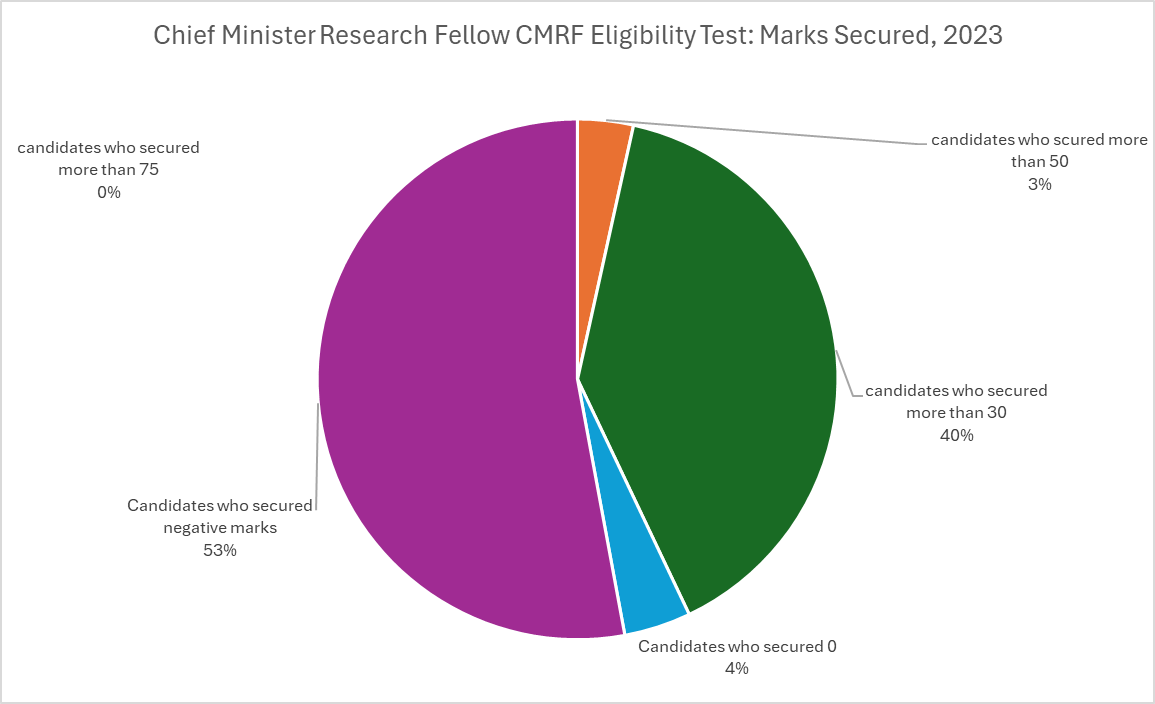
I wanted to end the article with that image, but, I started with the elite debates, and there are several currently on. So, let me end with that. Indian elite problem starts with their inability to comprehend their own ignorance about how 90% of the society actually manages. That is the feeling I get when I watch the current genuflection, gentrification and the reactive patronization on the AI for Education debates.
Investing in the development of teachers as valuable human resources for the next generation, providing them high quality education as a national priority, giving them secure and comfortable jobs without obligations or favour seeking, ensuring a transparent governance of the licensing system of colleges, ensuring timely replacement for critical government vacancies (I assume someone somewhere recognizes shaping the future generation is a critical function), are all our challenges, These require prolonger structural and systemic engagement. Merely replacing one content with another, one photograph with another, or humans with technology, will not bridge the gap that has been created by the long corrosion of institutional norms.
Unless we engage and work with the structural and systemic reforms that are long overdue, no technological innovation, change of curriculum, content or pedagogy or any number of committees of well meaning experts and scholars, will not be able to bring any change beyond a superficial level.
Add new comment