Right-Sized for the Bioregion
Rethinking India's Enterprise Taxonomy beyond the Size Ladder
Ramasubramanian[1]
Discussion paper · November 2026
Abstract
India measures its enterprises on a single ladder of size, from micro to large, using investment in plant and machinery and turnover. This paper argues that the ladder answers the wrong question. It was built for a factory-centred development model, and it cannot tell a resilient livelihood from a vulnerable one.
The paper traces the ladder's genealogy. The colonial Factory Act of 1881 first defined the factory by power and headcount. A Ford Foundation team designed India's small-industry apparatus in 1953–54, while the Mahalanobis plan put heavy industry first and sidelined J.C. Kumarappa's village-industry alternative. In 1966 the small-industry criterion narrowed to investment in plant and machinery alone.
The mismatch now shows in official data. Of 7.61 crore Udyam-registered enterprises, 99.3 per cent are "micro". In March 2026 the Rajya Sabha Standing Committee on Industry acknowledged this legacy anomaly when it recommended a separate nano category at about ₹10 lakh investment.
The customary bureaucratic response is to repair a systemic anomaly with a quick fix. A farsighted repair would make the system future-ready. This paper attempts the latter: rather than adding a rung at the bottom of the ladder, it re-examines the ladder itself. It proposes that enterprises be judged by fit, not size: right-sized to their bioregion, tied to local markets, and, where they serve distant markets, sized so that a supply-chain shock can be absorbed by the community. It draws on India's long record of vocational diversity and argues that households holding several vocations, some shared with their locality, are both more resilient and more fulfilled.
India's record of global shocks from 2000 to 2026 supports this. Work tied to local demand absorbed every one of these shocks, while work tied to distant chains was hit first, and the public purse paid for the difference. The case against local shocks such as drought or demonetisation is weaker: it holds only where households keep several vocations.
The paper closes by proposing five performance indicators for a new classification: resilience, local sustainability, strength of local governance, social harmony and assured individual wellbeing.
Note: The concept, solution outlined and the structuring of the document is mine. I have used AI tool to help with the research, infographic presentation and editing the document only.
1. The problem with a ladder of size
India's enterprise policy rests on one question: how big is this enterprise? Every category, from nano to large, is a rung on the same ladder. The ladder assumes that the natural path of an enterprise is upward, and that policy exists to help it climb.
This paper asks a different question: does this enterprise fit the place it lives in? A potter selling within a cluster of villages, a weaver meeting the needs of a village, a craftsperson supplying an export chain and a software team in a village each need different things. Their investment in machinery tells us little about whether they are secure, resilient, sustainable or good for the people who run them. These are the problems for any nation, society, community or work force moving forward into transition economy.
The argument for a revision of the current categorization and the new proposal proceeds in four steps:
- Genealogy. The size ladder is not neutral. It grew from a colonial definition of the factory and a 1950s development model that treated the factory as the template for all enterprise (Section 2).
- Evidence of strain. Official data now show the ladder failing on its own terms, and Parliament has begun to say so (Section 3).
- An alternative measure. An economy shaped by climate change needs to place the environment at the centre of its categorisation. Enterprises need to be right sized to their bioregion and to the shocks their markets can transmit, particularly as a community's capacity to absorb market shocks is directly linked to scale. Market shocks have intensified in a world heavily affected by climate change and pandemics. India's tradition of vocational diversity shows how such an economy has held together (Sections 4 and 5).
Purpose. Drawing on the humanities, the paper derives wellbeing from first principles and proposes five indicators by which a new classification would judge enterprise (Sections 6 and 7).
2. Genealogy of the size ladder
The size ladder was assembled in three layers: a colonial definition of the factory, a 1950s development model, and a 1966 decision to measure small industry by its machines alone. Each layer took the factory as the template for all enterprise.
2.1 The colonial factory (1881)
The colonial Factory Act of 1881 produced the first official definition of a factory in modern Indian history: a workplace using steam power and regularly employing over 100 workers. The 1891 amendment lowered the threshold to 50 workers.[2]
This is the colonial inheritance of the current system. The state first learned to see enterprise through the factory gate, counting power and heads. Everything outside that gate, the household, the workshop, the village craft, was left unclassified; it was later classified by the same logic under the Khadi and Village Industries Commission Act of 1956. During the First World War, the Indian Industrial Commission (1916–18) was appointed to examine the possibilities of further industrial development in India. While it proposed changes oriented towards the speedy transfer of finished goods to Britain, it also lamented the lack of training among Indians. Madan Mohan Malaviya presented a dissenting note calling for speedier industrialisation of India.
2.2 The 1950s development paradigm
After independence, planning put heavy industry first. The Mahalanobis model behind the Second Five Year Plan (1956–61) prioritised investment in heavy industry and capital goods.[3] Archival research shows that Soviet advisers worked with the Planning Commission as the Second Plan was formulated.[4]
Small industry was shaped by a different foreign hand. The Government of India invited an international planning team, funded by the Ford Foundation, to study small-scale industries. Its survey began on 4 December 1953 and its report was submitted on 31 March 1954.[5] Its recommendations led to four regional Small Industries Service Institutes in 1954 and the National Small Industries Corporation the following year.[6]
The paper's reading: American advisers designed the apparatus for small industry, while Soviet-influenced planning set the priority on heavy industry. Both treated the factory as the unit of development, differing only on its size.
2.3 The sidelined alternative: Kumarappa
J.C. Kumarappa offered a different template. He organised the All India Village Industries Association from 1935 and argued for decentralised, village-based production. By the early 1950s, planning had largely turned to heavy industry and top-down industrialisation, and his association had been sidelined.[7] His Economy of Permanence remains the closest Indian precedent for the bioregional argument this paper makes.
The 1950s were not hostile to small industry in words. The Village and Small Scale Industries (Karve) Committee of 1955 urged priority for village industries and decentralised growth.[8] Small industry was supported as a supplement to the factory model, not as an alternative to it. The categorisation and establishment of the KVIC, which has since been mainstreamed and integrated into the MSME framework itself, was an extension of the scale-based approach.
2.4 Measuring by machines (1950–1966)
The measure itself moved steadily towards the shop floor (Table 1).
Table 1. Evolution of the small-industry definition
| Year | Change |
|---|---|
| 1950 | First small-scale definition: fixed-asset limit plus an employment condition; the Fiscal Commission described a unit with hired labour of usually 10 to 50 hands.[9] |
| 1955 | Definition by fixed investment, after the Small Industries Development Programme began in 1954.[10] |
| 1966 | Limit narrowed to investment in plant and machinery only.[11] |
| 2026 | The MSMED Amendment writes the twin criterion of plant and machinery investment and turnover into the Act.[12] |
The investment-in-machinery metric is therefore not a colonial import. It was a choice of the developmental state, made after independence. That strengthens the argument: India chose to measure enterprise by the machines a factory owns, and has kept that measure for six decades.
3. What the current data show
The ladder now places almost every Indian enterprise on its bottom rung. Of 7.61 crore enterprises registered on the Udyam portal, 7.56 crore (99.3 per cent) are micro, about 4.88 lakh are small and about 36,816 are medium.[13]
The April 2025 revision widened the bottom rung further. It raised the micro ceiling from ₹1 crore to ₹2.5 crore in investment and from ₹5 crore to ₹10 crore in turnover.[14] One category now spans a household unit with minimal tools and a factory with ₹2.5 crore in machinery.
The Rajya Sabha Standing Committee on Industry, chaired by Tiruchi Siva, presented its 333rd Report on 11 March 2026. It warned that the higher limits let comparatively larger enterprises stay in the micro segment, diluting benefits for household-level enterprises. It recommended a separate nano category at around ₹10 lakh investment "without further delay", and pointed to Kerala, which already runs a nano category up to ₹10 lakh.[15]
The committee's recommendation is welcome but conservative. A nano rung still measures enterprise by investment, and still implies a path upward. This paper takes the committee's diagnosis, that one category is hiding very different enterprises, and asks whether any rung on a size ladder can capture the difference that matters.
The constraint data support that question. By 2023-24, own-account enterprises relying mainly on family labour made up about 88 per cent of informal manufacturing enterprises, and demand and finance were the most common combined obstacles.[16] Whether these enterprises are small by constraint or by choice is exactly what the size ladder cannot see.
4. Rethinking scale: right-sized for the bioregion
The paper proposes that an enterprise's size be judged against two things it depends on: the ecology and demand of its bioregion, and the shocks its markets can send back to it. Size stops being a rung and becomes a fit.
4.1 Two kinds of enterprise, two sizing rules
- Enterprises serving local markets. These should be sized to what the bioregion can supply and absorb: its raw materials, water, soil, energy and local demand. An enterprise that outgrows its bioregion must import inputs or export waste, and begins to transmit stress rather than absorb it.
- Enterprises serving distant markets. These are legitimate and often valuable. But they should be sized so that if the distant chain breaks, the community around them can absorb the loss: through other vocations, local demand and mutual support.
The second rule is the paper's distinctive proposal. It treats exposure to distant markets as a risk the community carries, not just a growth opportunity the enterprise enjoys.
4.2 The evidence of fragility
India has twice in six years seen what happens when livelihoods are sized for distant chains rather than for community absorption.
- 2020. The Ministry of Labour told the Lok Sabha that 1,04,66,152 migrant workers returned to their home states during the lockdown, 32.49 lakh of them to Uttar Pradesh. The same ministry said it maintained no data on job losses.[17]
- 2026. A cut in industrial gas supply, a fallout of the war in West Asia, squeezed production across Gujarat's manufacturing hubs. Factory owners from Morbi to Surat asked migrant workers to return to their hometowns.[18]
In both cases the shock travelled down a long chain and landed on villages that had sent their workers away. The villages absorbed the shock without having been built to. The paper's argument is that a classification should make that hidden burden visible.
4.3 The shock record, 2000–2026: who absorbed and who broke
The global shocks India faced between 2000 and 2026 sort enterprises along the line this paper proposes. Work tied to local demand kept people employed through every one of them. Work tied to a distant chain was hit first, and villages and the state absorbed its losses.
Ten major geoeconomic and geopolitical shocks fall in this period: the dot-com bust, the global financial crisis, the euro-area debt crisis, Brexit, the US–China trade tensions, COVID-19, the global inflation shock, the war in Ukraine, the 2025 tariff shock and the 2026 war in the Middle East. Four of them left a clear Indian record of who was hit and who absorbed the loss (Table 2).
Table 2. Who was hit and who absorbed the loss in four global shocks
| Shock | Hit first: work tied to distant chains | Absorbed it: work tied to local demand |
|---|---|---|
| Global financial crisis, 2008–09 | About 5 lakh jobs lost in export sectors in October–December 2008; gems and jewellery employment fell 8.58%.[19] | The economy still grew 6.7% in 2008-09, and employment in the surveyed sectors recovered within a year.[20] |
| COVID-19, 2020 | Salaried jobs fell by 18.9 million by July 2020 and were slow to return.[21] | Of 91.2 million informal jobs lost in April, 84.4 million were back by July. Agriculture's share of employment rose from 42.5% (2018-19) to 46.5% (2020-21).[22] |
| US tariffs, 2025–26 | Exports to the US fell 37.5% between May and September 2025; garment, diamond and shrimp clusters in Tiruppur, Surat and the coast reported layoffs.[23] | The economy grew 7.6% in 2025-26.[24] |
| Middle East war, 2026 | About 9.8 lakh Indians returned from the Gulf between late February and mid-April; Kerala reports falling consumption.[25] | Unemployment rose to 5.5% in May 2026 and was back at 5.0% by August.[26] |
The dot-com bust, Brexit and the US–China trade war barely touched Indian employment, because India's exposure through them was slight. The euro-area crisis, the global inflation shock and the Ukraine war left no usable employment record.
This is the distinction drawn in Section 7.1, seen in the data. Both behaviours sit inside the same informal sector: the diamond polisher who depends on one overseas buyer, and the farmer or local trader who sells within the district. A size ladder places both on the same micro rung. What separates them is exposure to distant markets, not investment.
Exposure has a public price. The 2008–09 stimulus cost 1.8–2.9 per cent of GDP,[27] against public health spending of about 1.1 per cent of GDP that year.[28] The deficit it left was later closed by cutting Plan spending, which funded health, education and rural employment schemes, by ₹1.07 lakh crore in 2012-13.[29] The 2025 tariff shock drew a ₹45,060 crore export-support package.[30] Exposure also runs through inputs. Import-dependent fertiliser and fuel cost about ₹2.5 lakh crore in extra subsidy and foregone excise in 2022-23,[31] roughly a third of all government spending on education that year.[32] In 2026, the fuel-excise cut is costing about ₹14,000 crore a month.[33] The paper's argument is that a classification counting Exposed enterprises and imported inputs in each district would show this liability before a shock, instead of after it. Those are the "Building resilience" and "Locally sustainable" indicators in Section 7.2.
Two cautions keep this honest:
- Holding jobs is not holding income. In 2020 local and farm work held people in employment, but average earnings fell about 17 per cent and 230 million more people fell below the national minimum-wage line.[34] The resilience indicator therefore measures recovery time and income share, not jobs alone.
- The case against local shocks is weaker, and conditional. A bioregional enterprise carries its bioregion's risks. Local shocks have hit cash-dependent and informal enterprises hardest: after demonetisation, total employment fell by about 15 lakh in early 2017.[35] Weather is also a local shock: the 2002-03 drought pulled national growth down to 4.4 per cent.[36] That year industry and services grew faster while agriculture fell, so diversity across activities cushioned the loss. The paper's answer to local shocks is that same diversity at household scale: the portfolio household of Section 5.2. A bioregional enterprise is resilient to local shocks only when the households around it hold several vocations. This remains a hypothesis to test.
The bioregional definition therefore has a strong case against global shocks, which have been the main source of disruption since 2000. Its case against local shocks is conditional, and depends on vocational diversity.
4.4 Connectivity removes the case for aggregation
The classic case for concentrating enterprise in cities and industrial estates was access: to markets, information, finance and skills. Digital connectivity weakens that case. Zoho's first rural office opened in Mathalamparai, Tenkasi, in 2011 with six employees, and the company has since added rural centres.[37]
The point is not that every village needs a software firm. It is that location no longer has to follow scale. An enterprise can stay in its habitat, keep its overheads low and still reach the world, and it can choose how far to grow.
4.5 Stepping aside from the size ladder
The proposal does not add a nano rung below micro. It steps aside from the ladder altogether. Two enterprises with the same investment could fall in different categories: one right-sized for its bioregion, the other over-exposed to a distant chain. Section 7 sets out how such a classification would be measured.
5. Vocational diversity as resilience
The paper's central proposition is that a household holding several vocations, some of them shared with its locality, is both more resilient and more fulfilled than one tied to a single job. India's own record of vocational diversity is the starting evidence for this claim.
5.1 India's vocational record
The Anthropological Survey of India's People of India project, led by K.S. Singh, involved 470 scholars and identified 4,694 communities during fieldwork from October 1985 to 1994.[38] Its occupational data were organised as traditional, current and newly acquired occupations for 4,635 communities.[39] The published India's Communities volumes highlight occupational diversification and the impact of technology and development.[40]
Two features matter for this paper. First, vocations were many and locally specific. Second, they changed over time: communities added new occupations without abandoning old ones. Diversity was not a relic. It was a living way of spreading risk.
5.2 The portfolio household
The paper proposes the portfolio household as its unit of analysis, in place of the single enterprise. Such a household might farm, run a small processing unit, practise a craft and take seasonal work. When one income fails, others carry it.
Two forms of community linkage strengthen the portfolio:
- Joint enterprise. Several households run one activity together, sharing tools, risk and returns.
- Common practice. Many households in a locality practise the same vocation independently, creating shared skills, buyers and reputation.
This is a proposition, not yet a finding. The paper hypothesises that households with diverse vocations, at least one linked to the community, show (a) faster recovery from shocks and (b) higher self-reported wellbeing. Section 9 sets out how to test both.
5.3 A necessary caution: diversity without caste
Much of India's historical vocational diversity was hereditary and caste-bound. A humanities audience will rightly ask whether celebrating it risks celebrating that. The same Standing Committee cited above warned that PM Vishwakarma's trade names, such as Naai, Charmakar, Kumhaar and Dhobi, risk reinforcing occupational rigidities, and recommended profession-neutral names.[41]
The paper therefore argues for an open vocational portfolio: many vocations available to every household by choice and skill, not by birth. The resilience value lies in the diversity, not in its inheritance.
6. Wellbeing from first principles
The paper argues that the purpose of enterprise is a good human life, and that five threats to humanity as a whole can each be met better by diverse, local, right-sized enterprise than by concentrated industry. The threats are derived from first principles; an external ranking is used only as a check.
6.1 The starting premise
A human life goes well when a person is physically active, does work that has meaning, lives among people they trust, and depends on a habitat that is healthy. Earning money is one means to these ends, not the end itself. An economy that asks people to spend most of their waking life working for money, far from their habitat and community, undermines the very ends it claims to serve.
This premise is the paper's argument. It draws on the wellbeing and happiness praxis that has grown in response to the stresses of industrial work. It is not claimed as an empirical finding.
6.2 Five threats and the local-enterprise response
Table 3. Five threats to human wellbeing and how diverse local enterprise counters them
| Threat to humanity | Why it follows from the premise | How diverse local enterprise counters it | External check: WEF Global Risks 2026, 10-year rank[42] |
|---|---|---|---|
| Ecological overshoot | Human life depends on a healthy habitat | Production sized to the bioregion keeps enterprise tied to the regeneration of its own soil, water and forests | Extreme weather 1; biodiversity loss 2; Earth-system change 3 |
| Resource and supply-chain fragility | Security depends on not relying on one distant source | Many small, diverse local producers mean no single point of failure | Natural resource shortages 6 |
| Livelihood displacement by AI and automation | Meaningful work is part of a good life | A broad portfolio of embodied, place-based skills is hard to automate | Adverse outcomes of AI 5 |
| Erosion of social trust | People need others they can trust | Face-to-face local economies rebuild trust through repeated dealings | Mis- and disinformation 4 |
| Decline in physical and mental health | A body needs activity; a mind needs balance | Work as a modest, active share of life, in one's own habitat | Not in the top five; WEF links decline in health and wellbeing to polarisation |
The World Economic Forum ranks are based on a survey of over 1,300 leaders and experts. Four of the five threats correspond to the WEF's ten-year top six. The fifth, health and balance, is the paper's own emphasis and its main contribution from the humanities.
6.3 What the labour signal suggests
In Surat, migrant embroidery workers began an agitation on 16 August 2026 demanding eight-hour shifts and a weekly holiday, rights unions say are already in law. Unions report that many workers still work 12-hour shifts. The campaign is called Gaon Chalo ("Go to the village"), and workers have threatened to return to their villages if demands are not met.[43]
The paper reads this carefully. It is a labour protest, not yet a return to village life. But its slogan names the village as the alternative to overwork. That is a signal worth taking seriously: workers themselves frame the balanced life as one rooted in their own habitat.
7. A proposed classification
The paper proposes classifying enterprises by their fit to place and their contribution to five outcomes, instead of by investment or turnover. Every measure below is a candidate for discussion; none has yet been piloted. Figure 1 summarises the structure: the goal rests on five indicators, and all five rest on households that hold several vocations by choice.
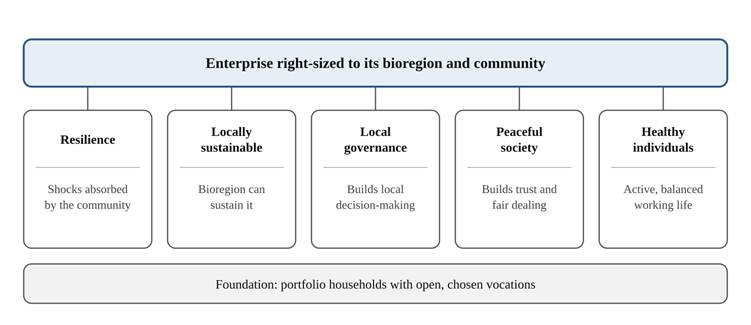
Figure 1. Proposed classification: five indicators on a household foundation
7.1 Three classes by market exposure
In place of micro, small and medium, the paper proposes three classes based on where an enterprise sells and whether its community can absorb a shock (Table 4).
Table 4. Proposed enterprise classes by market exposure
| Class | Market | Sizing test | Policy stance |
|---|---|---|---|
| Rooted | Mainly local or regional | Inputs and demand can be met within the bioregion | Protect and support; lightest compliance |
| Anchored | Partly distant | If the distant chain broke, the community's other vocations and local demand could absorb the loss | Support, with a resilience plan |
| Exposed | Mainly distant | A chain break would leave many households without income | Help diversify, build local buffers, or cap dependence |
The same investment can fall in any class. A ₹50 lakh unit selling across its district is Rooted; the same unit selling to one overseas buyer, in a town with no other industry, is Exposed.
7.2 Five performance indicators
Within each class, an enterprise would be assessed on five indicators (Table 5). The unit of assessment is the enterprise in its locality, not the enterprise alone.
Table 5. Five performance indicators and candidate measures
| Indicator | What it asks | Candidate measures |
|---|---|---|
| Building resilience | Does the enterprise help its community absorb shocks? | Share of household income from this enterprise; number of other vocations in the household; recovery time after a disruption |
| Locally sustainable | Can the bioregion sustain it indefinitely? | Share of inputs sourced within the bioregion; water and energy use against local supply; waste returned to local cycles |
| Strengthening local governance | Does it build local decision-making? | Membership in a cooperative, collective or gram sabha process; disputes settled locally; local reinvestment |
| Peaceful society | Does it build trust and reduce conflict? | Shared or joint enterprise activity; fair dealing with local buyers and suppliers; inclusion across caste and gender |
| Healthy individuals | Does it leave people healthy and balanced? | Hours of work per week; physical activity in the work; time for family and community; self-reported wellbeing |
7.3 How it would be used
The classification would sit beside, not immediately replace, the Udyam size categories. Support schemes would be targeted by class and indicator profile: a Rooted enterprise strong on health and sustainability would earn the lightest compliance; an Exposed enterprise would be offered help to diversify. Over time, the indicator profile could become the main basis for public support.
8. Objections and limits
Five objections deserve an answer before this proposal is taken further.
- "Small is mostly forced, not chosen." The evidence so far leans this way. Studies of Indian micro-enterprises find survival, not expansion, is the main concern, and finance and demand the main constraints.[44] The paper does not deny this. Its response is that a size ladder treats every small enterprise as a failure to grow, so it cannot separate the constrained from the content. A fit-based classification can.
- "This romanticises the village." Rural poverty, caste and patriarchy are real. The proposal is for open, chosen vocations with fair dealing and inclusion as measured indicators, not a return to inherited roles (Section 5.3).
- "India needs manufacturing jobs at scale." The proposal does not forbid large enterprise. It asks that exposure to distant chains be sized to what communities can absorb, and that the cost of failure be counted, as 2020 and 2026 showed it must be (Sections 4.2 and 4.3).
- "The indicators are hard to measure." They are harder than investment, but India already collects much of the raw material through Udyam, PLFS, ASUSE and panchayat records. Section 9 proposes a pilot.
"Who decides what fits a bioregion?" This is a governance question as much as a technical one. The paper's answer is that local bodies should, which is why strengthening local governance is itself an indicator.
9. Conclusion and research agenda
India's size ladder was built to count factories, and it now places 99.3 per cent of registered enterprises on one rung. Adding a nano rung, as Parliament proposes, is a useful first step. This paper argues for a second: judging enterprise by its fit to place and by what it does for resilience, sustainability, local governance, peace and health.
The argument invites economists, policymakers and scholars of the humanities to work on it together. Four pieces of work would turn it from a proposal into evidence:
- Test the household hypothesis. Using ASUSE and PLFS unit data, compare households with one vocation and with several on income stability after the 2020 lockdown and on reported wellbeing.
- Pilot the indicators. Apply the five indicators to a sample of enterprises in two contrasting bioregions, for example one coastal and one dryland district, and see which measures can be collected at reasonable cost.
- Map exposure. For a manufacturing cluster such as Surat or Morbi, estimate how many households depend on a single distant chain, and what a break would cost the villages that send workers there.
- Complete the history. Read the Indian Industrial Commission report (1916–18), the Fiscal Commission report (1949–50) and the Ford Foundation team's 1954 report for their treatment of size and classification; and complete the occupational data from the People of India volumes.
References
All online sources accessed November 2026.
Aditya Sarkar, Trouble at the Mill (New Delhi: Oxford University Press), https://www.india.oup.com/product/trouble-at-the-mill-9780199474424.
All India Radio News, "Russia–Ukraine War Resulted in Increase in Prices of Fertilizers," reporting a Lok Sabha reply, https://www.newsonair.gov.in/russia-ukraine-war-resulted-in-increase-in-prices-of-fertilizers-and-its-raw-materials-at-global-level-said-govt; Business Standard, "Centre Chose Expenditure Switch to Contain Widening Fiscal Deficit," 3 June 2022, https://www.business-standard.com/amp/article/economy-policy/centre-chose-expenditure-switch-to-contain-widening-fiscal-deficit-122060300053_1.html.
Angel One (PTI), "Government Forgoes ₹14,000 Crore Tax Revenue After Fuel Duty Cut Amid West Asia Crisis," 26 May 2026, https://www.angelone.in/news/economy/government-forgoes-14-000-crore-tax-revenue-after-fuel-duty-cut-amid-west-asia-crisis.
AsiaNews, "Over 37,000 Indian Workers Have Died Abroad in Five Years, the Majority in the Gulf," 2026, https://www.asianews.it/en/south-asia/india/over-37000-indian-workers-have-died-abroad-in-five-years-the-majority-in-the-gulf.
"Back to Basics," Frontier 45, nos. 14–17 (2012), https://frontierweekly.com/archive/vol-number/vol/vol-45-2012-13/45-14-17/45-14-17-Back%20to%20Basics.html.
British Library, Indian Industrial Commission records, https://searcharchives.bl.uk/catalog/036-000341375.
Business Standard, "Axe on Plan Expenditure Helps FM Meet Fiscal Deficit Targets," 17 February 2014, https://www.business-standard.com/amp/article/interim-budget-2014/axe-on-plan-expenditure-helps-fm-meet-fiscal-deficit-targets-114021700879_1.html.
Business Standard, "Exporters Get ₹45,060 Cr Boost amid US Tariff Blow," 13 November 2025; Deccan Herald, "Modi Govt Announces Rs 45,060 Crore Schemes to Support Exporters," https://www.deccanherald.com/india/modi-govt-announces-rs-45060-crore-schemes-to-support-exporters-3795979.
Carolien Stolte, "Asia as a Third Way: J.C. Kumarappa and the Problem of Development in Asia," in Lives of Cold War Afro-Asianism (Cambridge Core), https://www.cambridge.org/core/books/abs/lives-of-cold-war-afroasianism/asia-as-a-third-way-jc-kumarappa-and-the-problem-of-development-in-asia/463976C15D2E2944E4D6AC8C7F4F5146.
Centre for Sustainable Employment, Azim Premji University, State of Working India 2021: One Year of Covid-19 (2021), https://ruralindiaonline.org/pa/library/resource/state-of-working-india-2021-one-year-of-covid-19.
David C. Engerman, study of Soviet advisers and India's Second Five Year Plan (2019), St Petersburg University repository, https://dspace.spbu.ru/handle/11701/16836?mode=full.
Deccan Herald, "Govt Has No Data on Migrant Labourers' Job Loss," September 2020, https://www.deccanherald.com/amp/story/india%2Ffrom-the-newsroom-govt-has-no-data-on-migrant-labourers-job-loss-25-mps-test-positive-for-covid-19-887489.html.
Deutsche Welle, "Indians Forced to Return Home as Iran War Rocks Gulf Economy," Times of Oman, 25 April 2026, https://timesofoman.com/article/171073-indians-forced-to-return-home-as-iran-war-rocks-gulf-economy.
Down To Earth, "Surat Migrant Workers Demand Eight-Hour Shifts and Weekly Holidays in Gaon Chalo Protest," 2026, https://www.downtoearth.org.in/governance/surat-migrant-workers-demand-eight-hour-shifts-and-weekly-holidays-in-gaon-chalo-protest.
GKToday, "Factory Act of 1881," https://www.gktoday.in/factory-act-of-1881/.
Global Development Institute, University of Manchester, "What Holds Back Informal Enterprises in India?," https://blog.gdi.manchester.ac.uk/what-holds-back-informal-enterprises-in-india/.
Global Trade Research Initiative, analysis reported in The Tribune (ANI), 2 November 2025, https://www.tribuneindia.com/news/business/indias-exports-to-us-saw-sharp-fall-across-sectors-faced-with-trump-tariffs-report/amp.
Government of India, Economic Survey 2002-03, "Macroeconomic Overview," https://www.indiabudget.gov.in/budget_archive/es2002-03/chapt2003/chap11.htm.
Government of India, Economic Survey 2008-09, chapter 10, "Human Development, Equity and Environment," https://www.indiabudget.gov.in/budget_archive/es2008-09/chapt2009/chap105.pdf.
Government of India, Economic Survey 2023-24, chapter 7, Table VII.1, https://indiabudget.gov.in/budget2024-25/economicsurvey/doc/eschapter/echap07.pdf.
Government of India, Macro-economic Framework Statement, Union Budget 2009-10, https://indiabudget.gov.in/budget_archive/ub2009-10/frbm/frbm3.pdf.
Guru Jambheshwar University of Science and Technology, course material MC-202, https://www.ddegjust.ac.in/Portal/Upload/mc-202.pdf.
K.S. Singh, India's Communities, 3 vols (Anthropological Survey of India), listing at https://bagchee.com/books/BB162/indias-communities-in-3-volumes.
KNN India, "Parliamentary Panel Pitches Nano Enterprise Category, Flags MSME Policy Gaps," March 2026, https://knnindia.co.in/news/newsdetails/msme/parliamentary-panel-pitches-nano-enterprise-category-flags-msme-policy-gaps.
Kumarappa Institute of Gram Swaraj, "About Dr J.C. Kumarappa," https://kigs.org/about-dr-jc-kumarappa.
Lok Sabha Estimates Committee, Report (1959), https://eparlib.sansad.in/bitstream/123456789/57942/1/ec_02_79_1959.pdf.
Lok Sabha, answer of the Minister of State for Labour and Employment on the impact of the global financial crisis (2009), https://eparlib.nic.in/bitstream/123456789/722645/1/11017.pdf.
Lok Sabha, paper laid on the Ford Foundation team, 7 April 1982, https://eparlib.nic.in/bitstream/123456789/886783/1/07_VIII_07-04-1982_p19_p20_s635.pdf.
Mahesh Vyas (CMIE), "A Recovery to Worry: Revival in Employment Has Left Out Salaried Jobs," Business Standard, 10 August 2020, https://www.business-standard.com/amp/article/opinion/a-recovery-to-worry-120081001261_1.html.
Ministry of Labour and Employment, Labour and Employment Statistics 2022 (Periodic Labour Force Survey data), https://dge.gov.in/dge/sites/default/files/2022-08/Labour_and_Employment_Statistics_2022_com.pdf.
myScheme, Government of India, "Kerala Nano Household Enterprises Scheme," https://www.myscheme.gov.in/hi/schemes/sisnhe.
National Health Systems Resource Centre, National Health Accounts Estimates for India (2004-05 provisional series), summary at https://ruralindiaonline.org/ml/library/resource/national-health-accounts-2004-05/.
National Statistics Office, MoSPI, Periodic Labour Force Survey Monthly Bulletin, August 2026, https://www.mospi.gov.in/uploads/latestReleases/latest_release_1789465219488_2c7319c0-05c4-4d44-9eac-a99be911de26_Monthly_Press_note_Aug_2026.pdf.
NCBS Archives, People of India project correspondence, https://collections.archives.ncbs.res.in/handle/42412/1728.
Newslaundry, "Textile Workers in Surat Fight for 8-Hour Workdays and a Weekly Off," 9 October 2026, https://www.newslaundry.com/2026/10/09/textile-workers-in-surat-fight-for-8-hour-workdays-and-a-weekly-off.
Office of the Development Commissioner (MSME), circular on the definition of small-scale industry (May 1994), https://www.dcmsme.gov.in/publications/circulars/circularmay1994.html.
Pankaj Vashisht, ICRIER presentation on the global crisis and India's policy response (2009), https://www.icrier.org/pdf/Presentation_Pankaj_Vashisht_SessionII.pdf.
Paray and Sharma, International Journal of Globalisation and Small Business 13, no. 2 (2022): 192–210, https://ideas.repec.org/a/ids/ijgsbu/v13y2022i2p192-210.html.
Press Information Bureau, "MSMED (Amendment) Bill 2026," August 2026, https://www.pib.gov.in/PressReleasePage.aspx?PRID=2296358.
Press Information Bureau, release on the 333rd Report of the Department-related Parliamentary Standing Committee on Industry, 11 March 2026, https://www.pib.gov.in/PressReleasePage.aspx?PRID=2238242.
Quartz, "India Lost 1.5 Million Jobs in the Aftermath of Demonetisation" (citing CMIE), 2017, https://qz.com/india/1030632/india-lost-1-5-million-jobs-in-the-aftermath-of-demonetisation.
Rajya Sabha, Parliamentary Debates, 24 August 1954, https://rsdebate.nic.in/bitstream/123456789/584668/1/PD_07_24081954_2_p183_p184_1.pdf.
Reserve Bank of India, Macroeconomic and Monetary Developments 2008-09, https://website.rbi.org.in/web/rbi/-/publications/ii.-aggregate-demand-11345.
Reuters, report on the Ministry of Finance monthly economic review, 2026, https://whbl.com/?p=958169.
Sabrang India, "1 Crore Unemployed Labourers: Ministry of Labour and Employment," https://sabrangindia.in/article/1-crore-unemployed-labourers-india-ministry-labour-and-employment.
Smile Foundation, "P.C. Mahalanobis and Statistics Day," https://www.smilefoundationindia.org/blog/pc-mahalanobis-statistics-day/.
The Week, "Rajya Sabha Committee Proposes a Nano Fix for India's MSME Woes," 12 March 2026, https://www.theweek.in/news/biz-tech/2026/03/12/rajya-sabha-committee-proposes-a-nano-fix-for-india-msme-woes.html.
The Week, "Sridhar Vembu's Vision: How Zoho Transformed Tenkasi into a Rural Tech Hub," 11 October 2025, https://www.theweek.in/magazine/theweek/business/2025/10/11/sridhar-vembus-vision-how-zoho-transformed-tenkasi-into-rural-tech-hub.html.
The Wire, "War Brings Covid Nightmare Back to Gujarat's Factory Towns," 2026, https://m.thewire.in/article/labour/war-brings-covid-nightmare-back-to-gujarats-factory-towns.
Vajiram & Ravi, "Karve Committee," https://vajiramandravi.com/current-affairs/karve-committee/.
Vibes of India, "War Revives Ghost of Covid in Gujarat's Manufacturing Hubs," 2026, https://www.vibesofindia.com/war-revives-ghost-of-covid-in-gujarats-manufacturing-hubs/.
Wikipedia, "Kumar Suresh Singh," https://en.wikipedia.org/wiki/Kumar_Suresh_Singh.
World Bank, India small-scale industry study: Appendices (1992), https://documents1.worldbank.org/curated/en/793331676267099966/txt/The-Appendices.txt.
World Economic Forum, Global Risks Report 2026, summary at https://weforum.org/stories/2026/01/global-risks-2026-top-10-two-and-ten-year-horizon.
YourStory, "Rise in Income and Community Development: Zoho in Tenkasi," April 2021, https://yourstory.com/2021/04/rise-in-income-community-development-zoho-sridhar-vembu-tenkasi-ecg.
Footnotes
[1]This is a draft hypothesis for discussion. While the claims are available in public domain, and rests on documentary evidence, the source given in the notes. The claim is the paper's own hypothesis, is marked as such, and remains to be tested (Sec 9).
[2]Aditya Sarkar, Trouble at the Mill (New Delhi: Oxford University Press), https://www.india.oup.com/product/trouble-at-the-mill-9780199474424. GKToday, "Factory Act of 1881," https://www.gktoday.in/factory-act-of-1881/.
[3]Smile Foundation, "P.C. Mahalanobis and Statistics Day," https://www.smilefoundationindia.org/blog/pc-mahalanobis-statistics-day/. "Back to Basics," Frontier 45, nos. 14–17 (2012), https://frontierweekly.com/archive/vol-number/vol/vol-45-2012-13/45-14-17/45-14-17-Back%20to%20Basics.html.
[4]David C. Engerman, study of Soviet advisers and India's Second Five Year Plan (2019), St Petersburg University repository, https://dspace.spbu.ru/handle/11701/16836?mode=full.
[5]Rajya Sabha, Parliamentary Debates, 24 August 1954, https://rsdebate.nic.in/bitstream/123456789/584668/1/PD_07_24081954_2_p183_p184_1.pdf. Lok Sabha, paper laid on the Ford Foundation team, 7 April 1982, https://eparlib.nic.in/bitstream/123456789/886783/1/07_VIII_07-04-1982_p19_p20_s635.pdf.
[6]Lok Sabha Estimates Committee, Report (1959), https://eparlib.sansad.in/bitstream/123456789/57942/1/ec_02_79_1959.pdf.
[7]Carolien Stolte, "Asia as a Third Way: J.C. Kumarappa and the Problem of Development in Asia," in Lives of Cold War Afro-Asianism (Cambridge Core), https://www.cambridge.org/core/books/abs/lives-of-cold-war-afroasianism/asia-as-a-third-way-jc-kumarappa-and-the-problem-of-development-in-asia/463976C15D2E2944E4D6AC8C7F4F5146. Kumarappa Institute of Gram Swaraj, "About Dr J.C. Kumarappa," https://kigs.org/about-dr-jc-kumarappa.
[8]Vajiram & Ravi, "Karve Committee," https://vajiramandravi.com/current-affairs/karve-committee/.
[9]Office of the Development Commissioner (MSME), circular on the definition of small-scale industry (May 1994), https://www.dcmsme.gov.in/publications/circulars/circularmay1994.html. Guru Jambheshwar University of Science and Technology, course material MC-202, https://www.ddegjust.ac.in/Portal/Upload/mc-202.pdf.
[10]World Bank, India small-scale industry study: Appendices (1992), https://documents1.worldbank.org/curated/en/793331676267099966/txt/The-Appendices.txt.
[11]DC-MSME, circular (May 1994).
[12]Press Information Bureau, "MSMED (Amendment) Bill 2026," August 2026, https://www.pib.gov.in/PressReleasePage.aspx?PRID=2296358.
[13]Press Information Bureau, release on the 333rd Report of the Department-related Parliamentary Standing Committee on Industry, 11 March 2026, https://www.pib.gov.in/PressReleasePage.aspx?PRID=2238242. KNN India, "Parliamentary Panel Pitches Nano Enterprise Category, Flags MSME Policy Gaps," March 2026, https://knnindia.co.in/news/newsdetails/msme/parliamentary-panel-pitches-nano-enterprise-category-flags-msme-policy-gaps.
[14]KNN India, "Parliamentary Panel Pitches Nano Enterprise Category." The Week, "Rajya Sabha Committee Proposes a Nano Fix for India's MSME Woes," 12 March 2026, https://www.theweek.in/news/biz-tech/2026/03/12/rajya-sabha-committee-proposes-a-nano-fix-for-india-msme-woes.html.
[15]PIB, 333rd Report release, 11 March 2026. myScheme, Government of India, "Kerala Nano Household Enterprises Scheme," https://www.myscheme.gov.in/hi/schemes/sisnhe.
[16]Global Development Institute, University of Manchester, "What Holds Back Informal Enterprises in India?," https://blog.gdi.manchester.ac.uk/what-holds-back-informal-enterprises-in-india/.
[17]Deccan Herald, "Govt Has No Data on Migrant Labourers' Job Loss," September 2020, https://www.deccanherald.com/amp/story/india%2Ffrom-the-newsroom-govt-has-no-data-on-migrant-labourers-job-loss-25-mps-test-positive-for-covid-19-887489.html. Sabrang India, "1 Crore Unemployed Labourers: Ministry of Labour and Employment," https://sabrangindia.in/article/1-crore-unemployed-labourers-india-ministry-labour-and-employment.
[18]The Wire, "War Brings Covid Nightmare Back to Gujarat's Factory Towns," 2026, https://m.thewire.in/article/labour/war-brings-covid-nightmare-back-to-gujarats-factory-towns. Vibes of India, "War Revives Ghost of Covid in Gujarat's Manufacturing Hubs," 2026, https://www.vibesofindia.com/war-revives-ghost-of-covid-in-gujarats-manufacturing-hubs/.
[19]Lok Sabha, answer of the Minister of State for Labour and Employment on the impact of the global financial crisis (2009), https://eparlib.nic.in/bitstream/123456789/722645/1/11017.pdf. Government of India, Economic Survey 2008-09, chapter 10, "Human Development, Equity and Environment," https://www.indiabudget.gov.in/budget_archive/es2008-09/chapt2009/chap105.pdf.
[20]Government of India, Macro-economic Framework Statement, Union Budget 2009-10, https://indiabudget.gov.in/budget_archive/ub2009-10/frbm/frbm3.pdf.
[21]Mahesh Vyas (CMIE), "A Recovery to Worry: Revival in Employment Has Left Out Salaried Jobs," Business Standard, 10 August 2020, https://www.business-standard.com/amp/article/opinion/a-recovery-to-worry-120081001261_1.html.
[22]Ministry of Labour and Employment, Labour and Employment Statistics 2022 (Periodic Labour Force Survey data), https://dge.gov.in/dge/sites/default/files/2022-08/Labour_and_Employment_Statistics_2022_com.pdf.
[23]Global Trade Research Initiative, analysis reported in The Tribune (ANI), 2 November 2025, https://www.tribuneindia.com/news/business/indias-exports-to-us-saw-sharp-fall-across-sectors-faced-with-trump-tariffs-report/amp.
[24]Reuters, report on the Ministry of Finance monthly economic review, 2026, https://whbl.com/?p=958169.
[25]Deutsche Welle, "Indians Forced to Return Home as Iran War Rocks Gulf Economy," Times of Oman, 25 April 2026, https://timesofoman.com/article/171073-indians-forced-to-return-home-as-iran-war-rocks-gulf-economy. AsiaNews, "Over 37,000 Indian Workers Have Died Abroad in Five Years, the Majority in the Gulf," 2026, https://www.asianews.it/en/south-asia/india/over-37000-indian-workers-have-died-abroad-in-five-years-the-majority-in-the-gulf.
[26]National Statistics Office, MoSPI, Periodic Labour Force Survey Monthly Bulletin, August 2026, https://www.mospi.gov.in/uploads/latestReleases/latest_release_1789465219488_2c7319c0-05c4-4d44-9eac-a99be911de26_Monthly_Press_note_Aug_2026.pdf.
[27]Reserve Bank of India, Macroeconomic and Monetary Developments 2008-09, https://website.rbi.org.in/web/rbi/-/publications/ii.-aggregate-demand-11345. Pankaj Vashisht, ICRIER presentation on the global crisis and India's policy response (2009), https://www.icrier.org/pdf/Presentation_Pankaj_Vashisht_SessionII.pdf.
[28]National Health Systems Resource Centre, National Health Accounts Estimates for India (2004-05 provisional series), summary at https://ruralindiaonline.org/ml/library/resource/national-health-accounts-2004-05/.
[29]Business Standard, "Axe on Plan Expenditure Helps FM Meet Fiscal Deficit Targets," 17 February 2014, https://www.business-standard.com/amp/article/interim-budget-2014/axe-on-plan-expenditure-helps-fm-meet-fiscal-deficit-targets-114021700879_1.html.
[30]Business Standard, "Exporters Get ₹45,060 Cr Boost amid US Tariff Blow," 13 November 2025; Deccan Herald, "Modi Govt Announces Rs 45,060 Crore Schemes to Support Exporters," https://www.deccanherald.com/india/modi-govt-announces-rs-45060-crore-schemes-to-support-exporters-3795979.
[31]All India Radio News, "Russia–Ukraine War Resulted in Increase in Prices of Fertilizers," reporting a Lok Sabha reply, https://www.newsonair.gov.in/russia-ukraine-war-resulted-in-increase-in-prices-of-fertilizers-and-its-raw-materials-at-global-level-said-govt; Business Standard, "Centre Chose Expenditure Switch to Contain Widening Fiscal Deficit," 3 June 2022, https://www.business-standard.com/amp/article/economy-policy/centre-chose-expenditure-switch-to-contain-widening-fiscal-deficit-122060300053_1.html.
[32]Author's calculation: education spending of about ₹7.7 lakh crore, being 9.2 per cent of general-government expenditure of ₹83.8 lakh crore in 2022-23 (revised estimates), as reported in Economic Survey 2023-24, Table VII.1, https://indiabudget.gov.in/budget2024-25/economicsurvey/doc/eschapter/echap07.pdf.
[33]Angel One (PTI), "Government Forgoes ₹14,000 Crore Tax Revenue After Fuel Duty Cut Amid West Asia Crisis," 26 May 2026, https://www.angelone.in/news/economy/government-forgoes-14-000-crore-tax-revenue-after-fuel-duty-cut-amid-west-asia-crisis.
[34]Centre for Sustainable Employment, Azim Premji University, State of Working India 2021: One Year of Covid-19 (2021), https://ruralindiaonline.org/pa/library/resource/state-of-working-india-2021-one-year-of-covid-19.
[35]Quartz, "India Lost 1.5 Million Jobs in the Aftermath of Demonetisation" (citing CMIE), 2017, https://qz.com/india/1030632/india-lost-1-5-million-jobs-in-the-aftermath-of-demonetisation.
[36]Government of India, Economic Survey 2002-03, "Macroeconomic Overview," https://www.indiabudget.gov.in/budget_archive/es2002-03/chapt2003/chap11.htm.
[37]The Week, "Sridhar Vembu's Vision: How Zoho Transformed Tenkasi into a Rural Tech Hub," 11 October 2025, https://www.theweek.in/magazine/theweek/business/2025/10/11/sridhar-vembus-vision-how-zoho-transformed-tenkasi-into-rural-tech-hub.html. YourStory, "Rise in Income and Community Development: Zoho in Tenkasi," April 2021, https://yourstory.com/2021/04/rise-in-income-community-development-zoho-sridhar-vembu-tenkasi-ecg.
[38]Wikipedia, "Kumar Suresh Singh," https://en.wikipedia.org/wiki/Kumar_Suresh_Singh.
[39]NCBS Archives, People of India project correspondence, https://collections.archives.ncbs.res.in/handle/42412/1728.
[40]K.S. Singh, India's Communities, 3 vols (Anthropological Survey of India), listing at https://bagchee.com/books/BB162/indias-communities-in-3-volumes.
[41]PIB, 333rd Report release, 11 March 2026.
[42]World Economic Forum, Global Risks Report 2026, summary at https://weforum.org/stories/2026/01/global-risks-2026-top-10-two-and-ten-year-horizon.
[43]Down To Earth, "Surat Migrant Workers Demand Eight-Hour Shifts and Weekly Holidays in Gaon Chalo Protest," 2026, https://www.downtoearth.org.in/governance/surat-migrant-workers-demand-eight-hour-shifts-and-weekly-holidays-in-gaon-chalo-protest. Newslaundry, "Textile Workers in Surat Fight for 8-Hour Workdays and a Weekly Off," 9 October 2026, https://www.newslaundry.com/2026/10/09/textile-workers-in-surat-fight-for-8-hour-workdays-and-a-weekly-off.
[44]Paray and Sharma, International Journal of Globalisation and Small Business 13, no. 2 (2022): 192–210, https://ideas.repec.org/a/ids/ijgsbu/v13y2022i2p192-210.html. GDI Manchester, "What Holds Back Informal Enterprises in India?"